
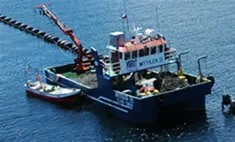
The two supplier types operating in Chile
When sourcing IQF mussel meat, half shell mussels, or whole shell mussels from Chile, buyers encounter two fundamentally different supplier profiles: dedicated mussel processors who own farming concessions and a plant, and multi-species trading intermediaries who buy from multiple plants and consolidate orders.
Neither is automatically wrong for every program, but the differences matter significantly for certification audits, cold-chain traceability, and long-term supply continuity.
Dedicated mussel processor
Owns farming concessions, operates its own plant, controls the full cold chain. Can provide batch-level traceability from sea to export container. Certifications (MSC, BRC, HACCP) cover the entire chain under one audit scope.
Multi-species seafood exporter
Trades in salmon, shrimp, mussel, and other species. May source mussels from third-party plants. Certification coverage depends on where product was actually processed. Traceability documentation is more complex to audit.
Regional trader / consolidator
Aggregates small volumes from several Chiloé producers. Useful for smaller order sizes but adds a documentation layer. Cold chain continuity and consistent sizing depend on the underlying plants, not the trader's own controls.
Supplier comparison table: key criteria for seafood buyers
The table below compares the evaluation criteria that matter most for regulated import markets including the EU, United States, and Japan. The columns represent the three supplier profiles described above.
| Evaluation criterion | Dedicated processor (e.g. Toralla S.A.) |
Multi-species exporter | Regional trader |
|---|---|---|---|
| Owns farming concessions | Yes — vertically integrated from sea | Rarely — typically buys raw material | No — aggregates from third parties |
| MSC or Friend of the Sea | Yes — certified at farm and plant level | Sometimes — depends on sourcing | Variable — depends on plants used |
| BRCGS food safety certificate | Yes — plant-level audit scope | Sometimes | Rarely |
| HACCP / APPCC documentation | Yes | Yes | Variable |
| Full batch traceability (sea to container) | Yes — single audit trail | Partial — split across entities | Complex — multiple source plants |
| EU market export approval (Sernapesca) | Yes | Yes | Check per plant |
| US FDA registration | Yes | Yes | Check per plant |
| Consistent IQF sizing (graded) | Yes — own grading line | Variable — depends on plant sourced | Variable |
| Cold storage at -18°C (own facility) | Yes | Sometimes leased | Usually third-party |
| Species focus (Mytilus chilensis) | 100% mussel-focused | Mixed species | Often mixed |
| Trade show presence (Boston, Brussels, Vigo) | Yes — regular exhibitor | Yes | Rarely |
| Verifiable customs export history | Yes — public trade data available | Yes | Limited or aggregated |
This table represents general profiles, not specific named companies. Buyers should always request and verify documents directly with any supplier before placing orders.
Five questions every importer should ask before choosing a Chilean mussel supplier
- Can you provide the full certification pack — HACCP, BRCGS, MSC, and Sernapesca approval — in a single document set? A supplier that cannot produce all four immediately is either not certified or disorganized. Either way, it is a compliance risk for EU or US customs entry.
- Is the farming concession registered under the same legal entity as the processing plant? Vertical integration reduces traceability complexity. If the farm and the plant are separate legal entities, understand exactly how batch documentation flows between them.
- What is your processing capacity and how does it vary by season? Chilean mussel harvests peak in winter months. A processor with 100–300 MT per day intake capacity can absorb order variability; a trader cannot always guarantee consistent supply when third-party plants are at capacity.
- Can you show me three years of customs export records? Chilean customs data is partially public. Any established exporter should welcome the question. Look for consistent volume to regulated markets — Spain, Netherlands, US, Greece — not just spot sales to opportunistic buyers.
- What cold chain documentation travels with the container? For EU entry, the health certificate, catch certificate (for MSC-labeled product), and cold store temperature logs must accompany the shipment. Ask to see a sample document pack before committing to a first purchase order.
Why Chiloé origin is a quality signal for mussel buyers
Chile's mussel production is concentrated almost entirely on Chiloé Island and the adjacent channels of Region X (Los Lagos). The cold sub-Antarctic water, relatively low pollution pressure, and long-line suspended cultivation technique — where mussels grow on ropes without touching the seabed — produce a clean, plump mussel that has earned EU and US import approval since the early 2000s.
Buyers should note that not all product labeled "Chilean mussel" originates in Chiloé. Some operators in the Puerto Montt area or further north operate in different water conditions. Ask for the farming zone and verify it against the Sernapesca-registered concession addresses before making origin claims to your own customers.
Where Toralla S.A. sits in this comparison
Toralla S.A. is a dedicated mussel processor based in Chonchi, Chiloé, with farming operations through Cultivos Toralla S.A. (250+ hectares of sea concessions in Chiloé channels). The group has been exporting continuously since 2000 and is the first Chilean mussel fishery to earn MSC certification.
- Own farming concessions (Cultivos Toralla S.A.) and processing plant in Chonchi
- 4,000 m² plant, 100–300 MT raw mussel per day capacity, 65,000 m³ cold storage at -18°C
- MSC certified, Friend of the Sea, BRCGS, HACCP, approved for EU and US markets
- IQF mussel meat (300/500, 200/300, 120/200 pcs/kg), half shell, whole shell formats
- Verified customs export history including Spain, Netherlands, United States, Greece, Turkey, Bulgaria
- Regular exhibitor at Boston Seafood Show, Seafood Expo Global Brussels, Conxemar Vigo
Frequently asked questions: Chilean mussel suppliers
What certifications should a Chilean mussel supplier have?
At minimum, buyers sourcing for EU or US markets should require HACCP documentation, a valid BRCGS or equivalent food safety certificate, MSC or Friend of the Sea certification if sustainability claims matter, and Sernapesca export approval. Suppliers who cannot produce all four in one document pack are a compliance risk.
What is the difference between a mussel trader and a mussel processor in Chile?
A trader buys product from multiple plants and consolidates shipments. A processor owns the plant, controls the cold chain, and can provide traceable batch documentation from sea harvest to export container. For buyers that need full traceability or certification audit trails, a processor is the lower-risk option.
Why does Chiloé origin matter for Chilean mussels?
Chiloé Island in Region X (Los Lagos) is the primary production zone for Mytilus chilensis. The cold, clean fjord and channel water, long-line suspended cultivation, and established Sernapesca monitoring make Chiloé-origin mussels a recognized quality signal in EU, US, and Asian markets.
How do I verify a Chilean mussel exporter's track record?
Chilean customs data is partially public through services like Veritrade and Volza. Look for consistent export volume across multiple years, documented shipments to regulated markets (EU, US), and use of major carriers (Maersk, MSC, CMA CGM). Request the supplier's SII RUT number and cross-check against the Sernapesca approved exporter list and the MSC fisheries database.
What IQF mussel meat sizes do Chilean exporters supply?
Standard Chilean IQF mussel meat is graded as small (300/500 pcs/kg), medium (200/300 pcs/kg), and large (120/200 pcs/kg). Some processors also supply an industrial grade above 500 pcs/kg. Confirm the grading method and tolerance with any supplier before placing a purchase order.
What is the tariff code for imported Chilean mussels?
Prepared or preserved mussels (cooked, frozen) are typically classified under HS code 1605.53 (16055300). Raw live or fresh mussels use a different heading. Verify the correct code with your customs broker based on the product's exact processing state and presentation.